
Safety in oxy-fuel welding and cutting depends heavily on the integrity of gas delivery systems. The rubber twin welding hose is designed to streamline the transport of fuel gas and oxygen through a single, bonded assembly, reducing the risk of tangles and accidental line crossovers in industrial workshops.
Selecting the correct hose requires an understanding of material compatibility, pressure ratings, and environmental exposure. Whether operating in a high-temperature fabrication shop or a mobile repair unit, the choice between different rubber compounds affects both the longevity of the equipment and the safety of the operator.
This technical guide examines the critical specifications, application boundaries, and procurement factors essential for engineers and procurement officers sourcing high-performance gas delivery solutions.

Understanding the Architecture of Twin Welding Hoses

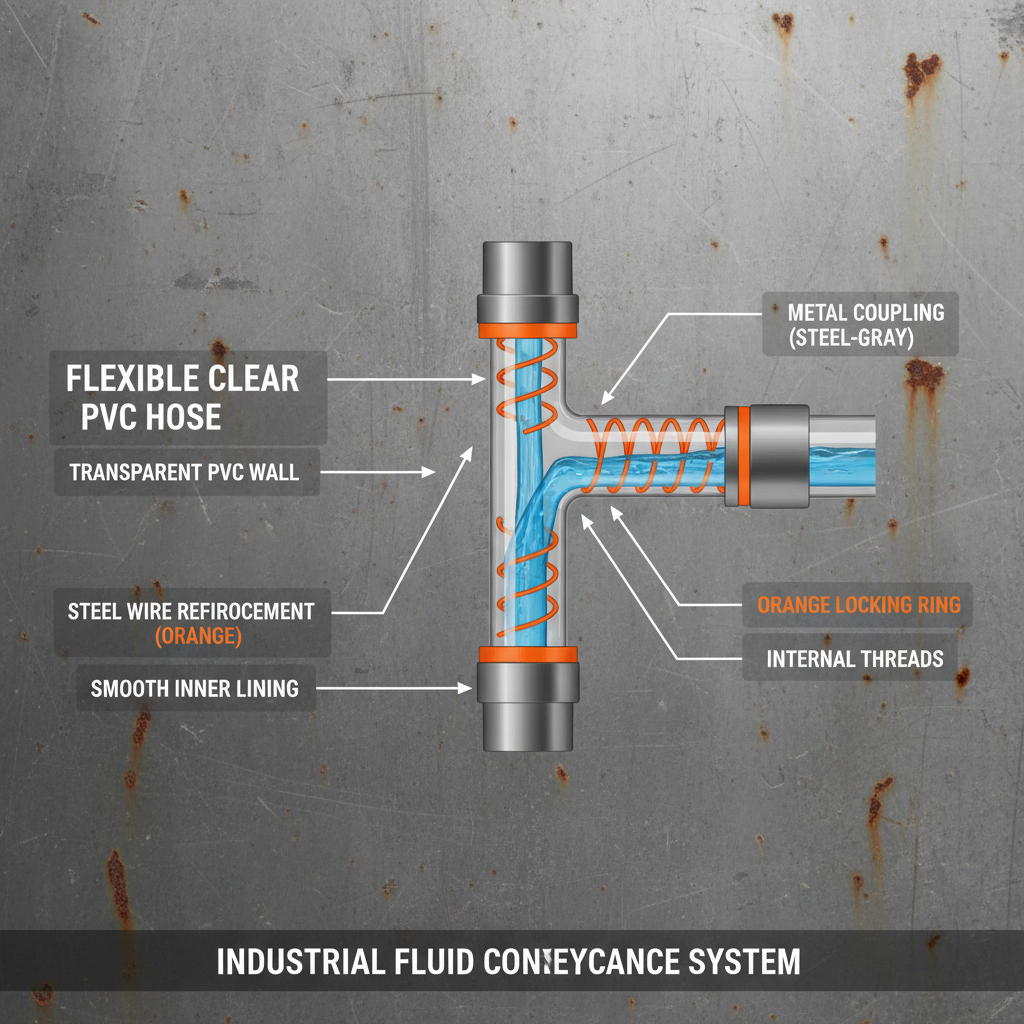
A rubber twin welding hose consists of two separate hoses—typically one red for fuel gas and one blue or green for oxygen—bonded together along their length. This dual-line configuration is not merely for convenience; it ensures that the two gas streams remain organized and reduces the likelihood of the hoses kinking or twisting during movement.
The bonding process creates a stable assembly that can withstand the mechanical stresses of a workshop environment. High-quality assemblies utilize synthetic rubber compounds that provide a barrier against atmospheric ozone and external abrasion, which are common causes of premature failure in lower-grade alternatives.
From a system perspective, the twin hose acts as the critical link between the gas cylinders and the torch. Any failure in the material integrity, such as micro-cracks or permeation, can lead to hazardous leaks, making the technical composition of the rubber the primary safety factor.
Core Technical Specifications and Material Value
The performance of these hoses is defined by their thermal range and pressure capacity. Standard high-grade rubber assemblies are designed to operate between -40ºC and +121ºC, ensuring they remain flexible in cold climates while resisting degradation in hot fabrication environments.
The inner tube must be chemically compatible with the gases it transports. For oxygen, the material must be cleaned of all hydrocarbons to prevent spontaneous combustion. For fuel gases, the rubber must resist the specific chemical properties of the gas to avoid softening or swelling of the inner lining.
Reinforcement layers, often consisting of high-tensile textile braids, provide the burst pressure resistance. This ensures that even under unexpected pressure spikes, the hose maintains its structural integrity and does not rupture, protecting the personnel in the vicinity.
Industrial Application Scenarios for Dual-Line Hoses
In heavy manufacturing and shipbuilding, twin welding hoses are deployed across expansive floor areas. Their bonded nature allows them to be pulled across decks and through narrow passages without the lines separating or snagging on equipment, which is critical for maintaining operational efficiency.
Automotive repair shops utilize these hoses for precision brazing and cutting tasks. In these environments, the hose's resistance to oil and grease is paramount, as exposure to shop fluids can break down standard rubber, leading to leaks. The use of polymer composites helps mitigate this risk.
Additionally, in the aerospace sector, where purity and safety standards are extreme, high-specification twin hoses are used to ensure that no contaminants enter the gas stream. The ability to provide consistent flow under varying temperatures makes them indispensable for specialized alloy welding.
Analyzing Pressure and Durability Benchmarks
Evaluating a hose's quality involves comparing its working pressure against its burst pressure. A high safety factor—the ratio between burst and working pressure—indicates a more robust product capable of handling surge loads without failing.
When comparing standard PVC-based options with reinforced rubber assemblies, the latter typically exhibits superior resistance to bending fatigue. This means that in applications requiring frequent repositioning of the torch, rubber hoses maintain their cross-sectional area and flow rate more effectively.
rubber twin welding hose Performance Metrics
The data indicates that high-grade rubber composites significantly outperform generic alternatives in terms of thermal stability and flexibility, which directly correlates to a lower frequency of replacement and higher workplace safety.
Operational Best Practices and Safety Protocols
Proper installation is as critical as the product quality. Hoses should be routed to avoid sharp edges and high-traffic areas where they could be crushed by vehicles or heavy machinery. Using hose guards in high-risk zones can extend the service life of the assembly significantly.
Regular inspection routines should include "soapy water tests" at all connection points to detect micro-leaks. Operators must also check for "dry rot" or cracking on the outer cover, which indicates that the rubber is losing its elasticity due to UV exposure or chemical attack.
When replacing sections of a twin hose, it is imperative to use appropriate clamps and fittings. Improperly seated ferrules or mismatched clamp sizes can create stress points that lead to premature failure at the joint, compromising the entire gas delivery system.
Future Trends in Polymer Composite Gas Hoses
The industry is moving toward advanced polymer composites that combine the flexibility of rubber with the chemical resistance of fluoropolymers. These new materials may offer even wider temperature windows and reduced gas permeation, which is essential for high-purity welding applications.
Integration of "smart" materials is also a potential development. Future hoses could incorporate conductive layers to prevent static build-up in volatile environments or embedded sensors that can detect pressure drops and trigger automatic shut-off valves.
Furthermore, there is an increasing focus on sustainable manufacturing. The transition toward recyclable synthetic elastomers, without compromising the burst pressure or safety ratings, is likely to become a procurement requirement for companies following strict ESG guidelines.
Decision Framework for Sourcing Welding Hoses
Choosing the right assembly depends on the specific operating conditions. A hose intended for a climate-controlled indoor shop has different requirements than one used for outdoor construction or marine repair. The balance between cost, durability, and safety must be analyzed.
Procurement officers should evaluate suppliers based on their ability to provide consistent material certifications and adherence to international pressure standards. The following table provides a comparison of hose types based on typical industrial needs.
| Hose Type | Primary Environment | Key Strength | Typical Limit |
|---|---|---|---|
| Standard Rubber | General Workshop | Cost-effective | Moderate UV resistance |
| Oil-Resistant Rubber | Automotive/Machining | Chemical stability | Heavier weight |
| High-Temp Polymer | Foundries/Heat Plants | Thermal stability | Reduced flexibility |
| Reinforced Twin | Heavy Fabrication | Burst pressure | Higher cost |
| Cold-Weather Grade | Outdoor/Arctic | Low-temp flexibility | Lower heat limit |
| Premium Composite | Aerospace/Medical | Zero permeation | Specialized fittings |
Ultimately, the selection should be driven by the most extreme condition the hose will encounter. For those requiring professional-grade polymer composite solutions, the product range available at www.ktnewmaterial.com offers a comprehensive baseline for technical comparison and selection.
Frequently Asked Questions
Conclusion
The rubber twin welding hose is more than a simple conduit; it is a safety-critical component of any oxy-fuel system. By prioritizing material compatibility, pressure ratings, and environmental resistance, operators can significantly reduce the risk of workplace accidents and equipment downtime.
As polymer science continues to evolve, the industry will likely see hoses that are more durable and easier to maintain. For organizations looking to upgrade their gas delivery infrastructure, reviewing the technical specifications and product categories at www.ktnewmaterial.com can provide the necessary data to make an informed procurement decision.




 English
 Afrikaans
 Albanian
 Arabic
 Azerbaijani
 Belarusian
 Bengali
 Bulgarian
 Czech
 Danish
 Dutch
 Finnish
 French
 German
 Greek
 Hebrew
 Hindi
 Hungarian
 Indonesian
 Irish
 Italian
 Japanese
 Kazakh
 Korean
 Kyrgyz
 Lao
 Latin
 Lithuanian
 Luxembourgish
 Malay
 Mongolian
 Myanmar
 Nepali
 Norwegian
 Persian
 Polish
 Portuguese
 Russian
 Serbian
 Slovak
 Spanish
 Swedish
 Tagalog
 Thai
 Turkish
 Ukrainian
 Uighur
 Uzbek
 Vietnamese
 Welsh