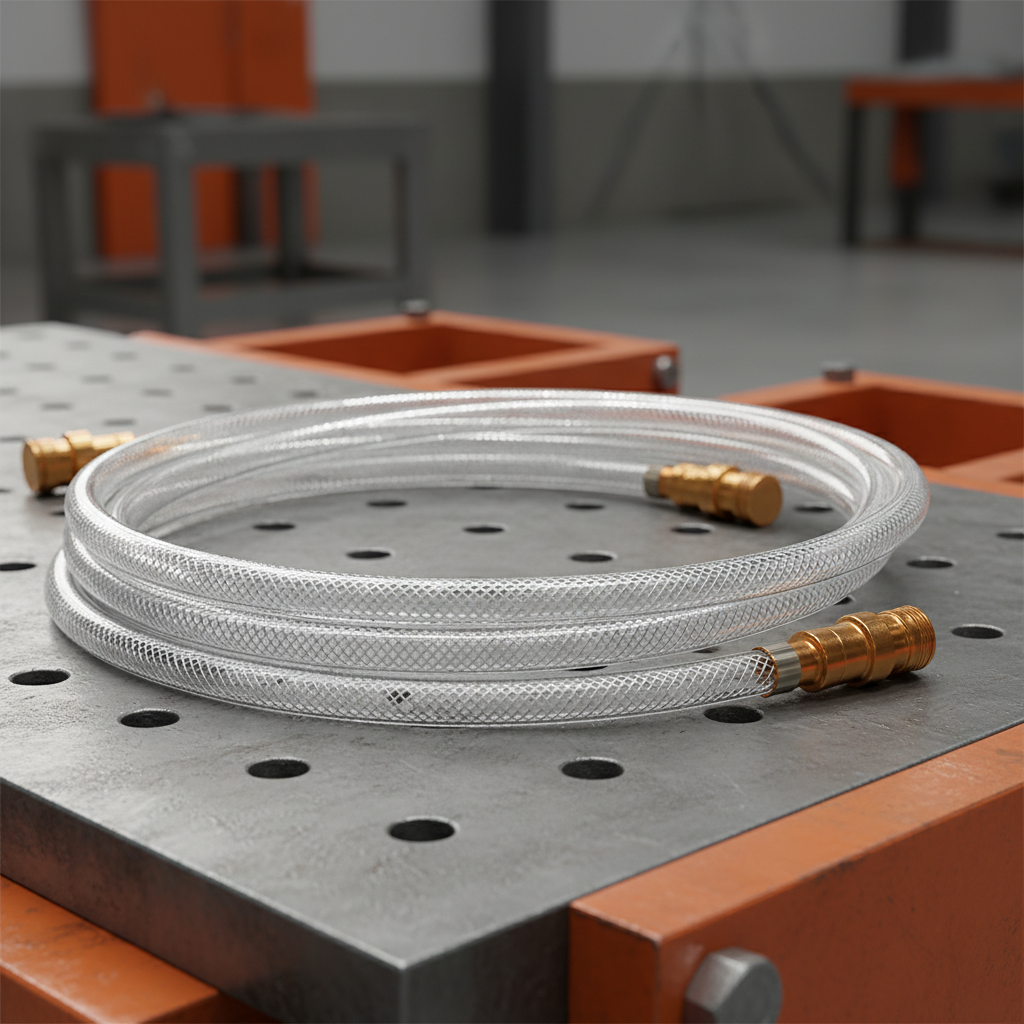
In the demanding landscape of industrial fluid transport, the reliability of gas conveyance systems is paramount for both operational efficiency and workplace safety. A high pressure lpg hose must be engineered to withstand extreme stresses, ensuring that liquefied petroleum gas is moved securely from storage to point of use without the risk of leakage or structural failure.
The global shift toward versatile energy sources has increased the reliance on robust piping solutions that can handle fluctuating pressures and harsh environmental conditions. Selecting a hose that combines high-strength reinforcement with chemical resistance is no longer just a technical preference but a critical safety requirement for industries ranging from mechanical maintenance to civil engineering.
By utilizing advanced polymer materials and precision braiding, a high pressure lpg hose provides the necessary tensile strength and elasticity to prevent cracking under pressure. Understanding the material composition and the technical limits of these hoses allows engineers to optimize system longevity and reduce costly downtime.


The foundation of a high-quality high pressure lpg hose lies in its commitment to using entirely new materials for both the inner and outer layers. By avoiding recycled plastics, the manufacturer ensures that the tube maintains a smooth, brilliant finish and, more importantly, a structural integrity that prevents premature cracking. This commitment to raw material purity extends the maximum lifespan of the hose to approximately five or six years, significantly outperforming standard alternatives.
Beyond simple purity, the construction utilizes highly durable polymer materials combined with unique soft PVC and synthetic rubber. This hybrid approach ensures that the hose is not only non-toxic and flexible but also highly resistant to corrosion, acids, and alkalis. The result is a lightweight yet strong conduit that can withstand the aggressive nature of chemical exposure without sacrificing its elastic properties.
When manufactured with 100% new materials and a four-season soft formula, the maximum lifespan is typically five to six years. This is significantly longer than ordinary hoses, which often degrade and crack after only one or two years of service, especially in climates with temperature fluctuations.
Yes, these hoses are specifically engineered for versatility. Thanks to the specialized polymer blend, they remain flexible and operational in temperatures as low as -10°C (-50°F), preventing the stiffness and cracking common in lower-grade PVC tubing.
The hoses utilize a dual-layer reinforcement system consisting of precisely braided high-strength polyester fibers. This braided structure provides the necessary tensile strength to resist internal pressure while maintaining the flexibility required for industrial installation.
Absolutely. The inner and outer layers are composed of unique soft PVC and synthetic rubber that are non-toxic, corrosion-resistant, and resistant to both acids and alkalis, ensuring safety for both the operators and the transported medium.
These hoses are ideal for mechanical maintenance, air compressors, engine components, pneumatic devices, and gas flushing equipment. They are also widely used in civil engineering due to their lightweight and durable nature.
Working pressure (W.P.) is the maximum pressure the hose is designed to handle continuously during normal operation. Burst pressure (B.P.) is the point at which the hose wall fails. A high-quality hose always has a burst pressure significantly higher than its working pressure to ensure a safety buffer.
Selecting a high-performance high pressure lpg hose is a critical decision that impacts both the operational efficiency and the safety of any industrial gas system. By prioritizing new, high-purity materials and a braided polyester reinforcement structure, users can ensure a product that resists corrosion, withstands extreme temperature swings from -10°C to 65°C, and offers a service life of up to six years. The combination of tensile strength, flexibility, and chemical resistance makes these hoses an essential component for everything from pneumatic devices to heavy civil engineering equipment.
Looking forward, the industry continues to move toward materials that offer even greater environmental resilience and sustainability. For businesses aiming to minimize downtime and maximize safety, investing in verified, high-specification hosing is the most effective strategy for long-term reliability. We encourage engineers and procurement specialists to evaluate their current pressure requirements and temperature environments to choose the optimal diameter and pressure rating for their specific needs. Visit our website: www.kebinghose.com

 Afrikaans
 Albanian
 Arabic
 Azerbaijani
 Belarusian
 Bengali
 Bulgarian
 Czech
 Danish
 Dutch
 Finnish
 French
 German
 Greek
 Hebrew
 Hindi
 Hungarian
 Indonesian
 Irish
 Italian
 Japanese
 Kazakh
 Korean
 Kyrgyz
 Lao
 Latin
 Lithuanian
 Luxembourgish
 Malay
 Mongolian
 Myanmar
 Nepali
 Norwegian
 Persian
 Polish
 Portuguese
 Russian
 Serbian
 Slovak
 Spanish
 Swedish
 Tagalog
 Thai
 Turkish
 Ukrainian
 Uighur
 Uzbek
 Vietnamese
 Welsh
 English