


8mm Vacuum Hose - Durable, Flexible, Kink-Resistant Ducting
8mm vacuum hose: a practical insider’s guide, with real specs, tests, and vendors to trust

Let’s be honest: hose choices are boring until they fail. Then everyone remembers the difference between cheap rubber and a properly engineered 8mm vacuum hose. I’ve seen it in workshops and labs—minute leaks causing hours of diagnosis. This piece pulls together what’s moving the market, what specs to watch, and how a flexible thermal sleeve (like Kebing’s diesel-heater flexi pipe) can live alongside a classic 8mm vacuum hose in the same build.
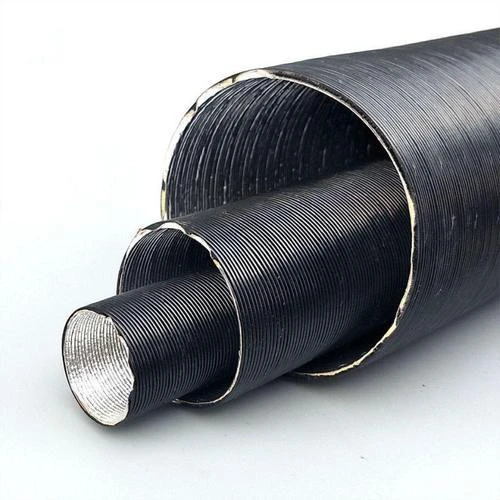
Context first. Kebing Hose (origin: Hongda Business 1602, Yuhua District, Shijiazhuang City, Hebei Province) is known for reflective, multilayer aluminum-foil/glass-fiber heat-shield tubes used near engines and exhausts. Different product, yes—but many customers pair that duct with silicone or EPDM 8mm vacuum hose for under-hood signal lines, EV auxiliaries, and turbo control. It’s a combo I increasingly hear about on the factory floor.
Industry snapshot and trends
- Shift to high-temp silicone (VMQ) and low-outgassing compounds for EV/HEV platforms.
- More thermal management: reflective sleeves around lines adjacent to hot zones (turbo, DPF, diesel heaters).
- Tighter QC: traceability, REACH/RoHS compliance, and process capability data on small-ID lines like 8mm vacuum hose.

Technical specifications (typical 8 mm ID)
| Parameter | Spec (≈, real-world may vary) |
|---|---|
| Inside Diameter | 8.0 ± 0.3 mm |
| Material Options | Silicone (VMQ) or EPDM; optional polyester/aramid braid |
| Temp Range | -50 to +200 °C (silicone); -40 to +125 °C (EPDM) |
| Vacuum Rating | Up to 100 kPa (absolute vacuum) @ 20 °C |
| Bend Radius | ≈ 25–35 mm without kinking |
| Compliance | RoHS, REACH; automotive lines aligned to SAE/ISO |
Thermal sleeve pairing: Kebing’s aluminum-foil/glass-fiber tube adds radiant heat rejection for hoses routed near exhausts. Extendable options (42/60/75 mm) make it quick to dress bundles—even if your 8mm vacuum hose is just one line in the loom.
Process flow and testing
Materials: VMQ/EPDM base, optional braid; for sleeves, aluminum-laminated glass fiber with foil exterior. Methods: precision extrusion (hose), spiral/overlap construction (sleeve), post-cure, cut-to-length, lot marking. QC: dimensional checks, vacuum collapse test, bend/kink test, thermal aging 168 h, abrasion per ISO methods, and odor/outgassing screens for cabin use. Service life: around 5–8 years under-hood (VMQ) depending on duty cycle; sleeves prolong line life where radiant heat is ugly.
Sample in-house data (illustrative): vacuum collapse ≤5% at 90 kPa; mass loss after 150 °C/72 h aging ≤1.2%; surface abrasion loss meets ISO 6945 guidance. Your mileage, as always, may vary.

Applications and advantages
- Automotive: boost control, EV vacuum pumps, HVAC actuators.
- Marine and small engines: stable idle lines; pair with heat shields.
- Lab/automation: instrumentation, leak-tight signal lines.
Advantages customers mention: consistent wall, easy routing, fewer clamp re-torques, and—surprisingly—less noise when sleeved next to exhaust ducting.
Vendor comparison (quick take)
| Vendor | Core Strength | Customization | Certs |
|---|---|---|---|
| Kebing Hose | Thermal sleeves + small-ID hoses pairing | Lengths, ID/OD, colors, sleeve add-ons | ISO 9001; RoHS/REACH statements |
| Vendor B | Automotive-grade silicone focus | Logos, cut-to-length | IATF 16949 |
| Vendor C | Budget EPDM lines | Limited | Basic QA docs |

Customization and a quick case
Options: custom ID/OD tolerances, wall thickness, braid type, pre-cut lengths, clamps, and foil/glass sleeves pre-fitted. Color-coding helps techs sort 8mm vacuum hose from similar coolant lines in cramped bays.
Case study: a diesel van upfitter struggled with vacuum dips near a heater exhaust. After swapping to VMQ 8mm vacuum hose and wrapping the run with Kebing’s reflective duct, idle stability improved; no more false MAP alarms. Simple, but effective.
Standards and compliance to watch
- SAE J30 fuel/vapor hose classes for materials and permeation alignment.
- SAE J1403 for brake/vacuum hose robustness in automotive contexts.
- ISO 6945 abrasion guidance; FMVSS 302 or UL 94 for flammability where applicable.
- ISO 9001/IATF 16949 for process discipline; RoHS/REACH for substances.
Citations:
- SAE International: SAE J30 – Fuel and Oil Hoses.
- SAE International: SAE J1403 – Vacuum Brake Hose.
- ISO 6945:1991 – Rubber hoses: abrasion resistance of outer cover.
- ISO 9001:2015 – Quality management systems; IATF 16949 for automotive.
- FMVSS 302 / UL 94 – Flammability of materials used in vehicles/devices.
-
How to Choose Fuel Oil Hose SAE J30 R6 for Size and Service ConditionsNewsNov.11,2026
-
Flexible High Pressure Top Quality PU Pneumatic Tube Air Hose: Comparing Two PU Tube OptionsNewsNov.03,2026
-
High-Quality Flexible PVC Clear Hose from China: Compatibility, Sizing and Documentation FAQNewsOct.28,2026
-
Choosing PU Anti-Sprial Hose: Medium, Dimensions and Operating ConditionsNewsOct.24,2026
-
Choosing Plastic PVC Water Pump Suction Hose from a Cost-Effective PVC Water Hose Supplier: Medium, Dimensions and Operating ConditionsNewsOct.24,2026
-
Choosing ALUMINUM FOIL VENTILATION DUCT: Application Fit and Specification ChecksNewsOct.24,2026
 Afrikaans
 Albanian
 Arabic
 Azerbaijani
 Belarusian
 Bengali
 Bulgarian
 Czech
 Danish
 Dutch
 Finnish
 French
 German
 Greek
 Hebrew
 Hindi
 Hungarian
 Indonesian
 Irish
 Italian
 Japanese
 Kazakh
 Korean
 Kyrgyz
 Lao
 Latin
 Lithuanian
 Luxembourgish
 Malay
 Mongolian
 Myanmar
 Nepali
 Norwegian
 Persian
 Polish
 Portuguese
 Russian
 Serbian
 Slovak
 Spanish
 Swedish
 Tagalog
 Thai
 Turkish
 Ukrainian
 Uighur
 Uzbek
 Vietnamese
 Welsh
 English







