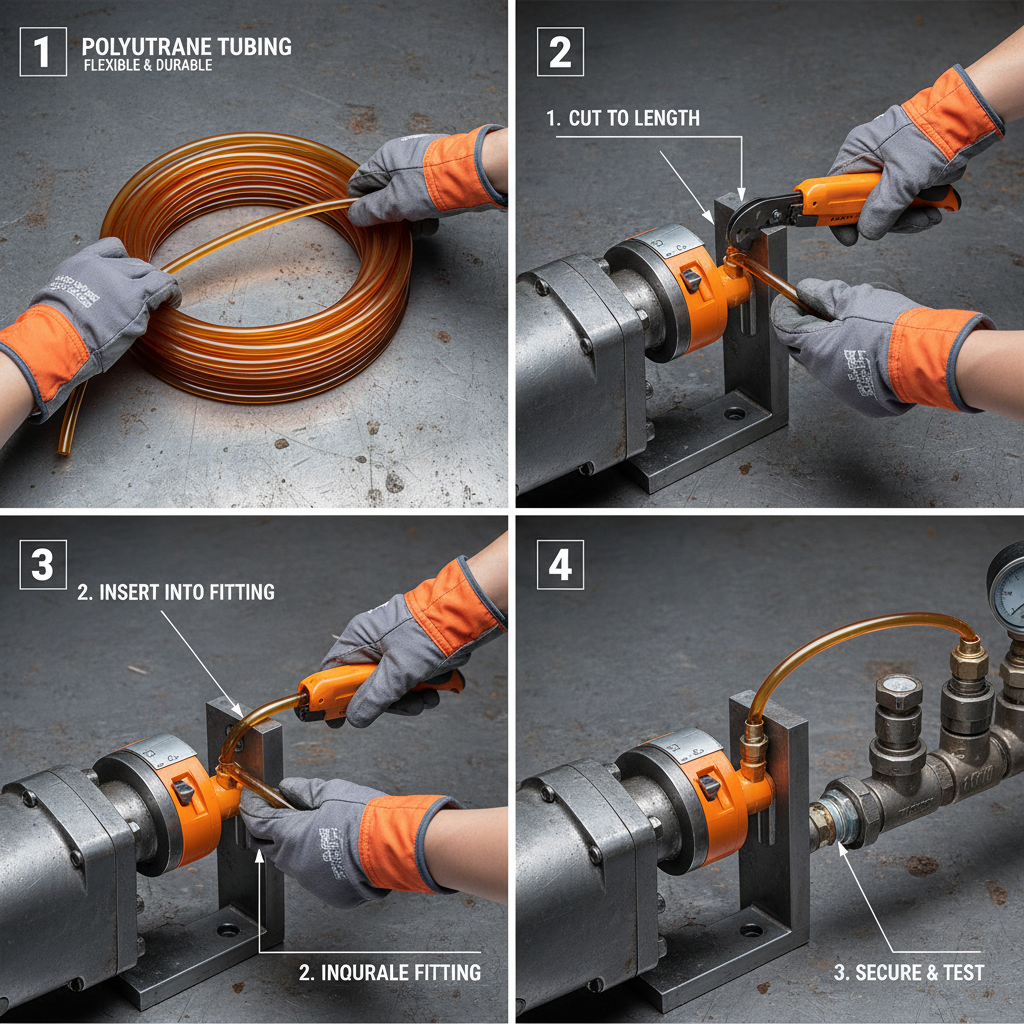
Finding a reliable conduit for gas and liquid transport is a critical requirement across various industrial and domestic sectors. The demand for high-performance tubing, such as the 1 4 inch lp gas hose, highlights the ongoing need for materials that balance flexibility with rigorous safety standards to prevent leaks and ensure operational efficiency.
In the modern manufacturing landscape, the transition toward reinforced PVC composites has revolutionized how we handle pressurized substances. By integrating high-tensile polyester fibers between layers of soft PVC, manufacturers can now produce hoses that are not only transparent and aesthetically clean but also capable of resisting corrosive agents and high pressures, bridging the gap between cost and durability.
Understanding the technical specifications of a 1 4 inch lp gas hose and its production process allows engineers and procurement specialists to make informed decisions. Whether used in solar water heaters, gas tanks, or agricultural irrigation, the right choice of reinforced tubing ensures long-term reliability and safety in hazardous environments.
Composition and Structural Engineering of LP Gas Hoses
The architectural integrity of a high-quality 1 4 inch lp gas hose is derived from a sophisticated three-layer design. The inner and outer layers are composed of premium PVC soft plastic, which provides a smooth, non-toxic surface and ensures the hose remains flexible across varying temperatures. This dual-layer PVC skin protects the internal flow from external contaminants while preventing the transported medium from leaking.
At the core of this structure lies the middle layer: a high-strength polyester fiber-reinforced mesh. This reinforcement is what gives the hose its "snake skin" characteristic, providing the necessary tensile strength to withstand internal pressure and preventing the tube from expanding or bursting under stress. This combination of chemical resistance from PVC and mechanical strength from polyester makes it an ideal choice for pressurized gas and liquid transport.
Global Industrial Significance and Demand
In the global industrial market, the reliance on efficient fluid and gas transport systems is absolute. From the expansive agricultural fields of Southeast Asia to the heavy industrial zones of Europe, the need for a durable 1 4 inch lp gas hose is driven by the requirement for versatility. These hoses must operate in environments ranging from -10 °C to +65 °C, making them essential for diverse climates.
The challenge facing many industries is the degradation of tubing due to acid, alkali, or corrosive chemicals. Standard rubber hoses often fail prematurely when exposed to aggressive industrial solvents. By adopting fiber-reinforced PVC technology, companies can significantly reduce downtime and replacement costs, adhering to international standards for safety and durability in chemical and petroleum transport.
Furthermore, the rise of renewable energy installations, such as solar water heaters, has surged the demand for transparent, pressure-resistant tubing. The ability to visually monitor flow and detect air bubbles or blockages in real-time provides a layer of operational security that opaque hoses cannot offer, cementing the role of reinforced PVC in modern green infrastructure.
Key Material Properties and Performance
One of the standout features of the 1 4 inch lp gas hose is its inherent resistance to corrosion. Because the PVC material is chemically stable, it does not react with most acids and alkalis, which is vital for applications in chemistry and petroleum sectors. This ensure that the purity of the transported medium is maintained without contamination from the hose wall.
The mechanical performance of the 1 4 inch lp gas hose is bolstered by the rigid PVC helix design. This external spiral reinforcement serves a dual purpose: it protects the hose from external abrasion and crushing while preventing the hose from collapsing during suction applications. This makes it equally efficient for both pressure discharge and vacuum suction.
Transparency is not just an aesthetic choice but a functional advantage. In professional settings, the ability to see the flow of materials inside the 1 4 inch lp gas hose allows for immediate troubleshooting. Whether it is checking for sediment in a fish suction pump or verifying gas flow in a tank, the transparent construction enhances safety and efficiency.
Technical Performance Metrics Comparison
When evaluating the efficiency of different hose configurations, it is essential to look at the relationship between working pressure and diameter. A smaller diameter hose often supports higher pressure ratings due to the tighter reinforcement weave, whereas larger diameters are optimized for flow volume. This balance is critical when selecting a 1 4 inch lp gas hose for specific industrial tasks.
By analyzing performance data across various sizes, we can see how the fiber-reinforced PVC construction maintains consistent reliability. The following chart illustrates the relative performance ratings of various configurations based on durability, pressure resistance, and flexibility.
Performance Rating of Various Hose Configurations
Versatile Application Scenarios
The practical utility of the 1 4 inch lp gas hose extends far beyond simple gas transport. In the construction and rental sectors, these hoses are indispensable for dewatering tasks, where they handle both trash suction and heavy-duty water discharge. Their ability to resist abrasion makes them perfect for dragging across rocky terrain or concrete surfaces.
In agricultural and civil fields, the hose is frequently employed in garden and lawn irrigation, as well as for pumping water in irrigation lines. Because it is non-toxic and food-grade compatible in certain iterations, it is also used in aquaculture for fish suction, ensuring that the delicate environment is not contaminated by the hose materials.
Production Process and Quality Control
The manufacturing of a high-performance 1 4 inch lp gas hose requires a sophisticated production line. The process begins with an extruder that melts and shapes the PVC soft plastic. This is followed by the precise integration of the polyester fiber-reinforced mesh, which is wound around the inner tube to provide structural strength.
Following extrusion, the hose passes through a cooling water tank to stabilize the dimensions and prevent deformation. A tractor then pulls the hose at a constant speed to ensure uniform wall thickness and mesh distribution, which is critical for maintaining a consistent working pressure throughout the entire length of the roll.
The final stages involve a winding machine and coiling equipment that package the hose for transport. Throughout this continuous production cycle, rigorous quality checks are performed to ensure that the "snake skin" structure is seamless and that the hose can withstand its rated working pressure without leakage.
Specification Analysis and Selection Guide
Selecting the correct 1 4 inch lp gas hose requires a deep dive into the technical data sheet. Users must consider the Inner Diameter (ID) and Outer Diameter (OD) to ensure compatibility with fittings, as well as the bending radius, which determines how the hose can be routed around tight corners in machinery.
Working pressure is perhaps the most critical metric. A hose with a larger diameter generally has a lower working pressure rating (e.g., 10-inch hoses at 30 bar vs 2-inch hoses at 90 bar). Understanding this inverse relationship prevents operational failures and ensures that the hose is not over-stressed during peak discharge or suction phases.
Weight and length per roll also play a significant role in logistics and installation. For heavy-duty construction dewatering, a heavier wall thickness is preferred to prevent collapse, whereas for solar water heater applications, a lighter, more flexible hose is prioritized for ease of installation.
Technical Specifications and Pressure Ratings for Reinforced PVC Hoses
|
Inner Diameter (inch)
|
Working Pressure (bar)
|
Bending Radius (mm)
|
Weight (Kg/m)
|
| 2 |
6 |
250 |
1.1 |
| 3 |
4 |
300 |
2.2 |
| 4 |
4 |
400 |
3.0 |
| 6 |
3 |
750 |
5.7 |
| 8 |
3 |
920 |
8.4 |
| 12 |
2 |
30 |
19.0 |
FAQS
Fiber-reinforced hoses, such as the 1 4 inch lp gas hose, include a middle layer of polyester mesh. This provides significantly higher tensile strength and pressure resistance, allowing the hose to handle both suction and discharge applications without collapsing or bursting, whereas standard PVC hoses are typically limited to low-pressure gravity flow.
Yes, the PVC material used in these hoses is naturally acid-and-alkali-resistant and corrosion-resistant. This makes them ideal for the chemistry and petroleum industries. However, it is always recommended to check the specific chemical compatibility chart for the exact substance being transported to ensure long-term durability.
The working temperature range for these reinforced PVC hoses is generally between -10 °C and +65 °C. Operating within this range ensures that the PVC remains flexible and the polyester reinforcement maintains its structural integrity, preventing the hose from becoming too brittle in the cold or too soft in extreme heat.
No, the transparency is a result of the high-quality PVC soft plastic used in the inner and outer layers. It does not compromise the strength of the hose, as the mechanical load is carried by the polyester fiber-reinforced mesh in the middle. The transparency is actually a functional benefit for monitoring flow and detecting blockages.
The rigid PVC helix is the spiral reinforcement seen on the exterior. It protects the hose from external abrasion and prevents the tube from kinking or collapsing when used in suction applications. This ensures a steady flow of materials even under negative pressure conditions.
When selecting a hose for gas tanks, you should consider the required flow rate and the maximum working pressure of your system. Refer to the specification table to match the Inner Diameter (ID) with your fittings and ensure the Working Pressure rating exceeds your maximum operating pressure by a safe margin.
Conclusion
The 1 4 inch lp gas hose and its fiber-reinforced counterparts represent a critical intersection of material science and industrial utility. By combining the flexibility and chemical resistance of PVC with the mechanical strength of polyester fibers and the protective nature of a rigid helix, these hoses provide a reliable solution for a vast array of applications—from agricultural irrigation to industrial chemical transport. The ability to handle both suction and pressure, combined with a transparent design for real-time monitoring, makes this tubing an essential asset for maintaining operational safety and efficiency.
As industries move toward more sustainable and durable infrastructure, the adoption of high-performance composite hoses will only grow. For businesses looking to optimize their fluid and gas transport systems, investing in quality-controlled, reinforced PVC tubing is a strategic move that reduces long-term maintenance costs and enhances workplace safety. We invite you to explore our full range of industrial hose solutions and find the perfect fit for your specific operational needs. Visit our website: www.kebinghose.com