0%

Table of Contents

The selection of a high-quality gas transfer line is critical for ensuring operational safety and efficiency in both industrial and residential environments. A reliable 1 2 lpg hose must be engineered to withstand the specific chemical properties of liquefied petroleum gas while resisting the environmental stressors that typically lead to premature degradation.

Across global markets, the demand for durable synthetic rubber tubing has surged as safety regulations become more stringent. The implementation of reinforced materials in a 1 2 lpg hose helps prevent catastrophic failures, such as bursts or leaks, which are often caused by pressure spikes or external abrasions in harsh working conditions.

Understanding the technical construction of these hoses—specifically the use of NR and SBR synthetic rubbers—allows engineers to optimize their systems for longevity and performance. By investing in a certified 1 2 lpg hose, users can ensure a seamless flow of energy while adhering to international safety standards for fuel transport.

High Quality Durable 1 2 lpg hose for Industrial Safety

Material Composition of the 1 2 LPG Hose

High Quality Durable 1 2 lpg hose for Industrial Safety

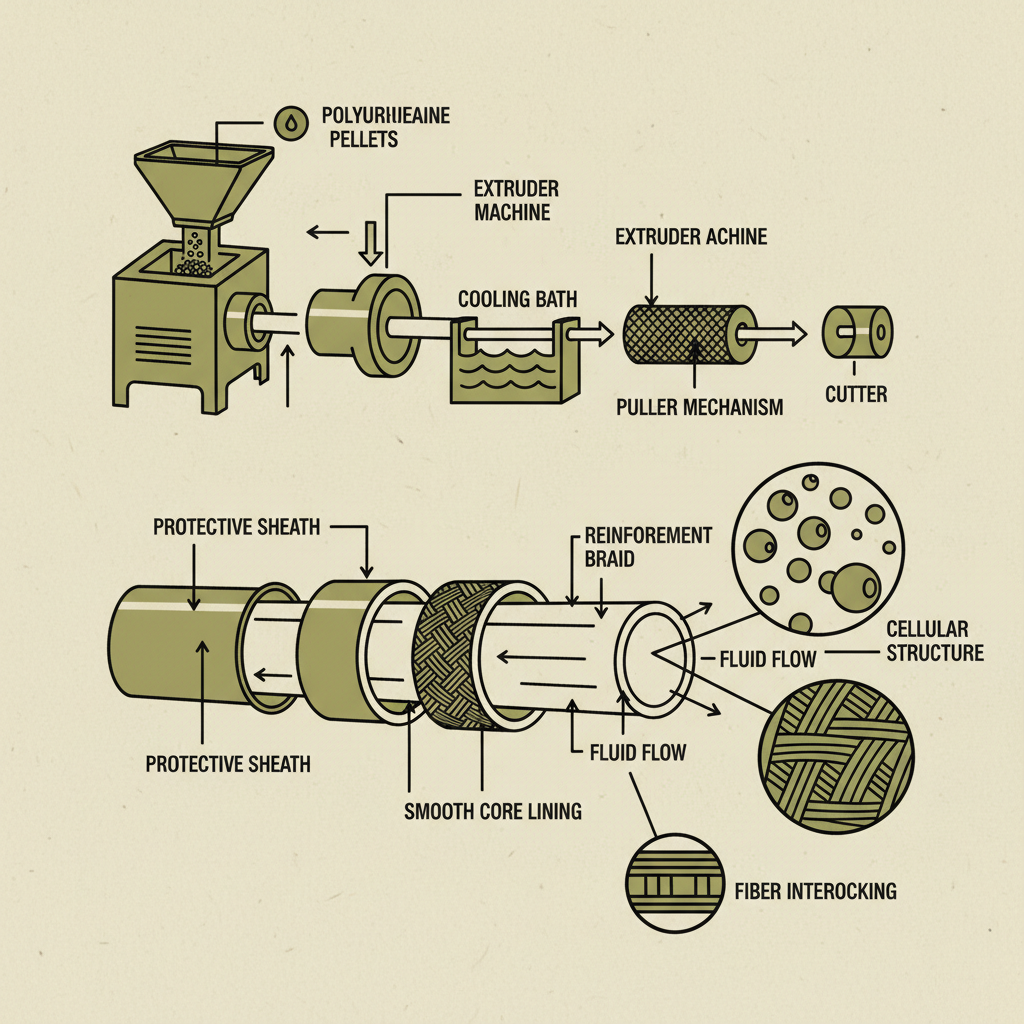
The core of a high-performance 1 2 lpg hose is constructed from a blend of NR (Natural Rubber) and SBR (Styrene-Butadiene Rubber) synthetic rubber. This specific combination is chosen to ensure that the inner tube remains stable when exposed to fuel mists and hydrocarbons, preventing the rubber from softening or swelling over time.

Beyond the inner tube, the outer cover also utilizes NR and SBR materials, available in smooth or wrapped surfaces. This dual-layer approach ensures that the 1 2 lpg hose is not only chemically compatible with the medium it carries but also physically resilient against the external environment.

Technical Performance and Pressure Ratings

Performance in fluid transfer is measured primarily by the ability to handle working and burst pressures. For a standard 1 2 lpg hose, the working pressure is typically rated at 20 bar (300 psi), providing a reliable safety margin for most commercial and domestic gas applications.

To ensure absolute safety, these hoses are designed with a significant burst pressure, often reaching 60 bar (900 psi). This 3:1 safety ratio ensures that the 1 2 lpg hose can withstand unexpected surges in pressure without risking an immediate rupture.

Temperature tolerance is another critical performance metric. The synthetic rubber blend allows the 1 2 lpg hose to operate effectively in extreme climates, ranging from as low as -40℃ (-104℉) to as high as 80℃ (+176℉), ensuring reliability in both arctic and tropical regions.

Environmental Resistance and Durability

Durability is paramount when deploying a 1 2 lpg hose in outdoor settings. The anti-aging properties of the synthetic rubber prevent the material from becoming brittle, which is a common failure point in lower-grade plastic tubing.

Exposure to sunlight and atmospheric oxygen can cause ozone cracking. However, a professional 1 2 lpg hose is specifically engineered to be weather and ozone resistant, maintaining its structural integrity even after prolonged exposure to UV rays.

Furthermore, the abrasion resistance of the outer cover is a key feature for industrial sites where hoses are frequently dragged across concrete or metal surfaces. This ensures that the 1 2 lpg hose does not wear through to the reinforcement layer, which would compromise the entire system.

Comparative Analysis of Hose Reinforcements

The structural strength of a gas hose depends heavily on its reinforcement layer. Most high-quality 1 2 lpg hose options utilize tensile polyester thread braiding, which provides a balance between flexibility and high tensile strength.

Depending on the application, users can choose between 1-ply or 2-ply braiding. While 1-ply is sufficient for low-pressure tasks, 2-ply reinforcement in a 1 2 lpg hose offers enhanced stability and a higher resistance to deformation under pressure.

Performance Rating of Different 1 2 LPG Hose Configurations


Global Industrial Applications

The versatility of the 1 2 lpg hose makes it indispensable across various sectors. In the hospitality industry, it is the primary conduit for powering commercial kitchen appliances, where resistance to oil mists and high ambient temperatures is essential for safety.

Beyond the kitchen, these hoses are widely used in remote industrial zones and agricultural settings for powering portable heaters and machinery. The robust nature of the 1 2 lpg hose ensures that fuel delivery remains uninterrupted even in rugged environments.

Safety Standards and Maintenance Protocol

To maximize the lifespan of a 1 2 lpg hose, a strict maintenance schedule is required. Regular visual inspections for signs of cracking, bulging, or wear are the first line of defense against potential leaks.

It is recommended that operators perform a soap-bubble test on all connections periodically. If a 1 2 lpg hose shows any sign of degradation, it should be replaced immediately regardless of its age to prevent hazardous gas escapes.

Proper storage also plays a role in safety. Storing the 1 2 lpg hose away from direct heat sources and avoiding sharp bends during installation prevents internal stress on the polyester braiding, extending the product's operational life.

Sizing Specifications and Selection Guide

Selecting the correct size for a 1 2 lpg hose is vital for maintaining optimal flow rates. With inner diameters (I.D.) ranging from 1/8” to 1-1/2”, users must match the hose size to the specific output of their regulator and the input of their appliance.

For smaller applications, a 1/4” or 3/8” 1 2 lpg hose is typically sufficient, whereas larger industrial burners may require 1” or larger diameters to prevent pressure drops across the line.

Weight and length considerations are also important for logistical planning. Most 1 2 lpg hose rolls come in 50m or 100m lengths, allowing for custom cutting to fit specific site layouts without unnecessary excess.

Detailed Technical Specifications for LPG Hose Variants

Inner Diameter (inch) Working Pressure (Bar) Burst Pressure (Bar) Max Length (M/roll)
1/4” 20 60 100±1%
3/8” 20 60 100±1%
1/2” 20 60 50±1%
3/4” 20 60 50±1%
1” 20 60 50±1%
1-1/2” 10 30 50±1%

FAQS

What materials make the 1 2 lpg hose oil-mist resistant?

The 1 2 lpg hose is constructed from a high-grade blend of Natural Rubber (NR) and Styrene-Butadiene Rubber (SBR). These synthetic polymers are specifically chosen for their chemical stability, which prevents the tube from degrading or swelling when exposed to oil mists and petroleum-based gases.

Can the 1 2 lpg hose be used in extremely cold weather?

Yes, the hose is designed for extreme thermal versatility. It maintains its flexibility and structural integrity in temperatures as low as -40℃ (-104℉), making it suitable for outdoor use in arctic conditions without cracking.

What is the difference between 1-ply and 2-ply reinforcement in these hoses?

Reinforcement is provided by tensile polyester thread braiding. 1-ply is ideal for standard, low-pressure applications, whereas 2-ply reinforcement provides higher mechanical strength and better resistance to deformation, offering increased safety for high-demand environments.

How often should I inspect my 1 2 lpg hose for safety?

We recommend a comprehensive visual inspection every month and a soap-bubble leak test every three months. Any sign of surface cracking, hardening, or bulging indicates that the hose has reached the end of its service life and must be replaced immediately.

Is the 1 2 lpg hose resistant to UV and ozone?

Yes, the outer cover is made from anti-aging synthetic rubber that is specifically formulated to be weather and ozone resistant. This prevents the "dry rot" common in standard rubber hoses when exposed to sunlight.

What is the typical burst pressure for the 1/2" size variant?

For the 1/2" size, the working pressure is 20 bar (300 psi), and the burst pressure is rated at 60 bar (900 psi), providing a robust 3:1 safety factor to prevent accidental ruptures during pressure spikes.

Conclusion

In summary, the 1 2 lpg hose represents a critical intersection of material science and safety engineering. By combining NR and SBR synthetic rubbers with high-tensile polyester braiding, these hoses provide the necessary resistance to oil mists, ozone, and extreme temperatures, ensuring a secure transfer of fuel in the most demanding environments.

As industrial safety standards continue to evolve, the transition toward higher-specification, multi-ply reinforced hosing is no longer optional but a necessity. We recommend that facility managers prioritize certified synthetic rubber solutions to minimize risk and maximize operational uptime. For more information on our professional range, visit our website: www.kebinghose.com.

William Harrison

William Harrison

William Harrison is the Lead Product Development Engineer at Kebing. He spearheads the innovation of new hose designs and material formulations, focusing on enhancing performance and expanding our product range. William holds a PhD in Polymer Chemistry and has a proven track record of bringing cutting-edge hose technologies to market.
Previous High Performance 1 4 inch lp gas hose for Industrial Use
Next High Quality Durable 3 4 lpg hose for Industrial Gas Transport
INQUIRE
en_USEnglish