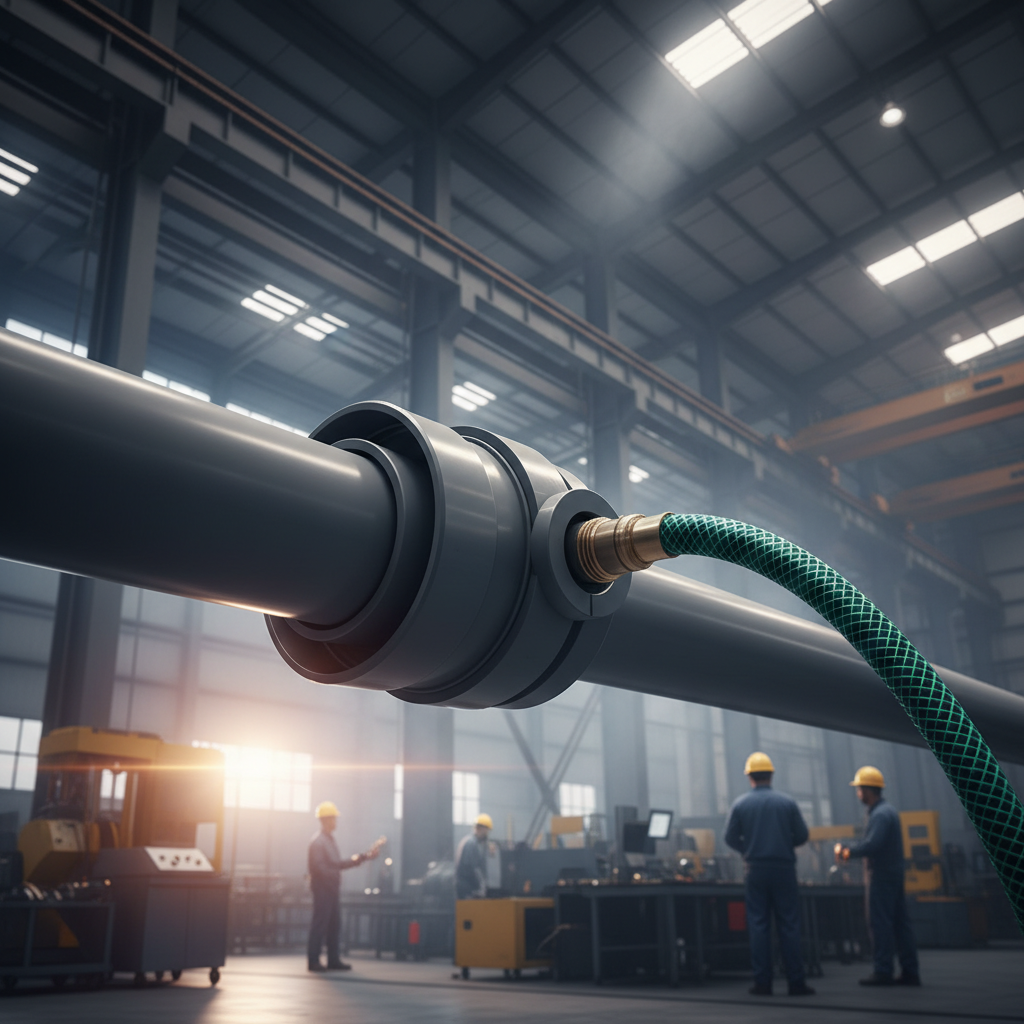
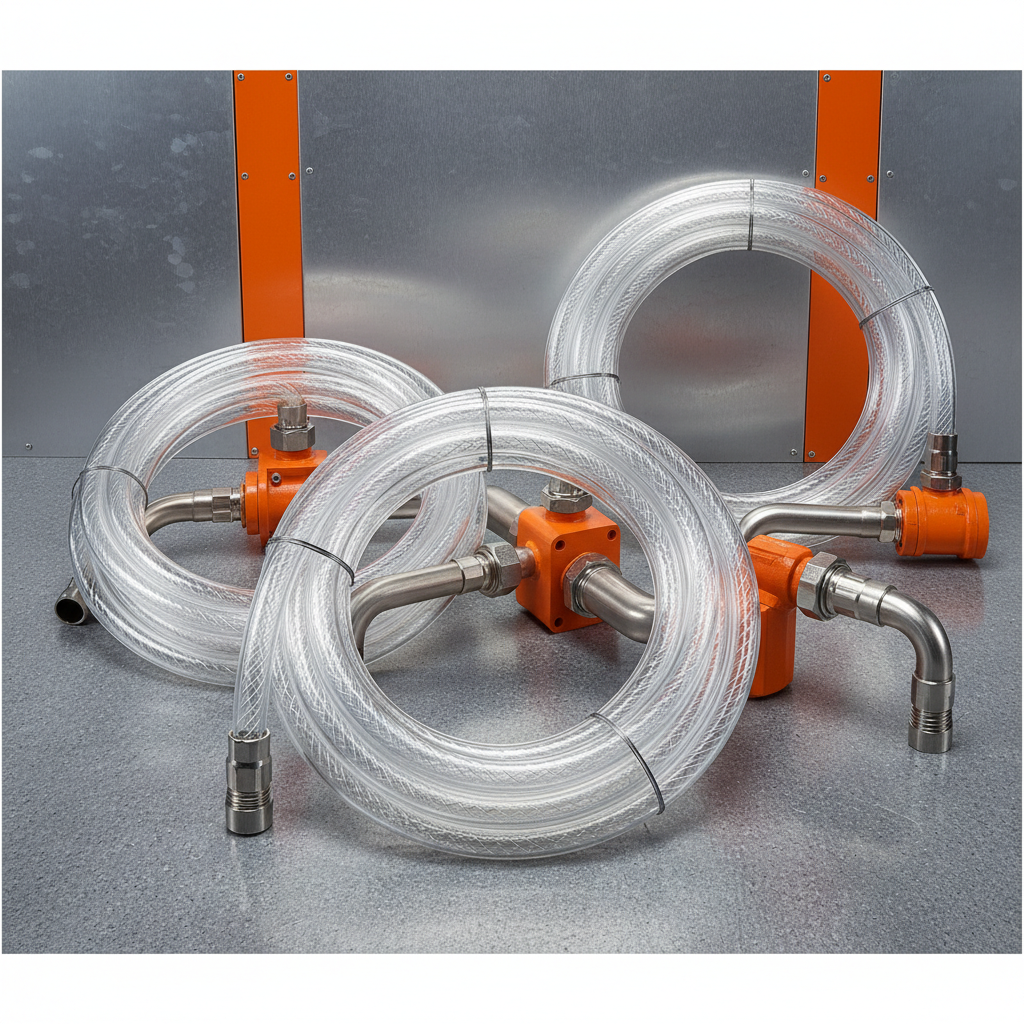
When standard off-the-shelf conduits fail to meet the precise thermal or chemical demands of a specific industrial process, the reliance shifts toward specialized engineering. In high-stakes environments—where a few degrees of temperature variance or a slight change in diameter can lead to systemic failure—the ability to source a custom made to order hose becomes a critical operational necessity.
The challenge for modern procurement officers is no longer just finding a supplier, but identifying a manufacturing partner capable of balancing material science with precise geometric specifications. From silicone-coated glass fibers that withstand extreme heat to reinforced PVC for heavy suction, the variables involved in custom hose design are extensive and often interdependent.
This report analyzes the technical logic behind custom hose fabrication, evaluates the critical selection criteria for high-temperature and chemical-resistant conduits, and provides a framework for integrating these bespoke components into industrial workflows.


Historically, industrial facilities adapted their machinery to fit available hose sizes. However, the rise of precision manufacturing has inverted this logic. Now, the conduit is engineered to fit the machine's specific flow rate, pressure requirements, and spatial constraints. This transition to "custom made to order" ensures that there are no unnecessary bends or oversized fittings that could lead to pressure drops or turbulence.
This shift is driven by the need for higher efficiency and lower maintenance costs. A bespoke hose, designed specifically for the media it carries—whether it be corrosive chemicals or high-temperature gases—drastically reduces the frequency of unplanned downtime caused by premature material degradation.
The efficacy of a custom hose depends on the synergy between its three primary components: the inner wall, the reinforcement layer, and the external spiral or jacket. For instance, in specialized ducting, the wall might consist of silicone-coated glass fiber fabric to provide a primary barrier against heat and acid, while the reinforcement is handled by glass fiber cords to prevent structural failure under vacuum or pressure.
The spiral reinforcement is another critical variable. By utilizing spring steel wire, manufacturers can ensure that the hose maintains its shape and resists collapsing under negative pressure, which is essential for vacuum and duct applications. The precision of this spiral winding determines the bending radius, which in turn affects how the hose can be routed through tight industrial layouts.
Beyond basic structure, the integration of polymer composites allows for the creation of specialized categories such as polyurethane pneumatic hoses or PVC steel wire hoses. Each material choice is a calculated decision based on the balance between flexibility, abrasion resistance, and the specific chemical compatibility required by the end-user's application.
Temperature resistance is one of the most demanding specifications in custom hose manufacturing. Standard plastics often fail at 100°C, but the introduction of silicone-coated glass fiber allows conduits to operate safely up to 300°C, with short-term peaks reaching 350°C. This capability is not merely about the coating, but about how the coating interacts with the underlying glass fiber cord to maintain tensile strength at extreme temperatures.
True material synergy occurs when the thermal resistance of the outer jacket is matched by the chemical stability of the inner liner, ensuring that the conduit does not only withstand external heat but also prevents the internal medium from degrading the structure.
At the opposite end of the spectrum, some applications require flexibility at cryogenic levels. The operational range of -70°C to +300°C found in high-end custom glass fiber ducts demonstrates the versatility of modern polymer composites. This broad range prevents the material from becoming brittle in cold environments while ensuring it does not melt or off-gas in extreme heat.
When evaluating the performance of a custom hose, engineers look at the relationship between the inner diameter (I.D.) and the maximum working pressure. As the diameter increases, the wall thickness and reinforcement density must be adjusted to maintain the required pressure rating. For example, a 3/4" hose may handle 3 bar, while a 16" diameter hose might be limited to 0.3 bar due to the physics of surface area and pressure distribution.
Another critical metric is the bending radius. A custom-made conduit must be able to navigate the physical constraints of a facility without kinking, as a kink creates a point of failure and restricts flow. This is achieved by calibrating the pitch of the spring steel wire spiral and the elasticity of the outer fabric.
In a typical industrial setting, such as a chemical processing plant, the requirements for fluid transport are often contradictory: the hose must be flexible enough to move with vibrating machinery but rigid enough to withstand vacuum pressure. This is where a custom made to order hose featuring a silicone-coated exterior and glass fiber reinforcement is employed to prevent corrosion from acid and alkali media while maintaining a thermal ceiling of 300°C.
Similarly, in pneumatic systems where dust and debris are present, polyurethane duct hoses are preferred over standard PVC due to their superior abrasion resistance. For manufacturers evaluating their system upgrades, the decision often comes down to the "duty cycle" of the hose—how many hours per day it is under maximum pressure and the volatility of the medium it carries.
The industry is moving toward "intelligent material selection," where the composite structure of the hose is designed using simulation software to predict failure points before production. This reduces the reliance on trial-and-error prototyping and allows for the creation of hoses with variable wall thickness—thicker at high-stress connection points and thinner in straight runs to reduce weight and cost.
Sustainability is also becoming a core driver. There is an increasing demand for thermoplastic elastomers that offer the performance of rubber but are fully recyclable. The challenge lies in maintaining the same level of chemical resistance and thermal stability as tradition silicone-coated glass fibers, which are historically the benchmark for high-temperature insulation.
Furthermore, the integration of anti-static and flame-retardant properties into the base polymer is becoming standard for hoses used in oil and gas or mining sectors. This evolution ensures that the custom hose is not just a conduit, but a safety component that prevents electrostatic discharge in hazardous atmospheres.
Choosing between a standard industrial hose and a bespoke solution involves a trade-off between immediate cost and long-term operational value. Standard hoses are suitable for low-risk, low-temperature applications where the environment is stable. However, when the cost of a single hour of downtime exceeds the price difference of a custom hose, the bespoke option becomes the economically rational choice.
The decision framework should prioritize the "criticality" of the hose's function. If the hose is part of a primary cooling loop or a chemical transport line, the risk of leakage or rupture is too high to rely on generic specifications. A custom solution allows for the exact matching of the bending radius to the equipment layout, eliminating the stress points that typically lead to failure in standard installations.
Ultimately, the value of a custom made to order hose lies in its ability to extend the Mean Time Between Failures (MTBF). By optimizing materials like silicone and glass fiber for the specific environmental stressors of the site, companies can transition from reactive maintenance to a predictable, proactive lifecycle management strategy.
| Selection Factor | Standard Hose Suitability | Custom Hose Suitability | Primary Risk of Mis-selection |
|---|---|---|---|
| Thermal Range (>150°C) | Low / Unsuitable | High / Optimal | Material melting or off-gassing |
| Chemical Aggression | Limited to basic PVC/Rubber | Specific Polymer Matching | Rapid wall degradation / Leaks |
| Spatial Constraints | Requires adapters/bends | Precision Bending Radius | Kinking and flow restriction |
| Vacuum Pressure | Risk of collapse | Steel Wire Reinforcement | Systematic suction failure |
| Lead Time Needs | Immediate / Off-the-shelf | Scheduled Production | Operational delays during build |
| Long-term ROI | Low initial cost / High OPEX | Higher CAPEX / Low OPEX | Increased unplanned downtime |
A custom made to order hose is engineered from the ground up to meet specific operational parameters that standard products cannot satisfy. This includes tailored inner diameters, specific material compositions for chemical compatibility (such as silicone-coated glass fiber for high heat), exact length requirements, and precise bending radii to fit unique machinery layouts. While standard hoses follow general industry sizes, custom hoses are designed based on the actual fluid dynamics and environmental stressors of a specific application.
Silicone provides an excellent thermal barrier and chemical resistance, while the glass fiber provides the structural skeleton that prevents the hose from softening or losing its shape at high temperatures. This combination allows the hose to operate continuously at 300°C and withstand short spikes up to 350°C. The silicone coating also protects the fiber from acid and alkali corrosion, making it ideal for industrial exhaust, heat shielding, and high-temperature fluid transfer where standard rubbers would fail.
Spring steel wire is embedded as a spiral reinforcement within the hose wall. Its primary purpose is to provide radial rigidity, preventing the hose from collapsing when internal pressure drops below atmospheric pressure (vacuum). In a custom-made hose, the pitch and thickness of this steel wire are calibrated to the required vacuum rating. This ensures that the conduit remains open, maintaining a consistent flow rate and preventing the "flat-spotting" that occurs in unreinforced flexible hoses.
Polyurethane should be prioritized when the application involves high abrasion, such as transporting metal chips, glass shards, or abrasive powders. Polyurethane has a significantly higher tear strength and abrasion resistance than PVC. While PVC is excellent for water and general air transport due to its cost-effectiveness and chemical resistance, polyurethane is the superior choice for heavy-duty industrial suction and dust extraction where the inner wall is subject to constant friction.
Yes, by utilizing advanced polymer composites and glass fiber reinforcement, it is possible to create hoses with an expansive operational window. For example, certain silicone-coated glass fiber ducts are rated from -70°C up to +300°C. This is achieved by selecting polymers that do not reach their glass transition temperature (become brittle) at low temperatures and using heat-stable fibers that do not decompose at high temperatures, ensuring stability across a wide thermal gradient.
The most common mistake is focusing solely on the material and ignoring the physical installation constraints, such as the bending radius. A hose that is chemically perfect but too rigid for its installation path will develop stress fractures and fail prematurely. Another frequent error is failing to specify the "peak" pressure or temperature rather than the "average," leading to conduits that fail during system surges. Accurate specification must include the medium's chemistry, peak thermal loads, vacuum requirements, and the exact physical route of the hose.
The transition from standard components to a custom made to order hose represents a strategic move toward industrial maturity. By aligning material science—such as the use of silicone-coated glass fiber and spring steel reinforcement—with the actual physical and chemical demands of the environment, enterprises can significantly reduce systemic risk and operational costs.
As polymer technology continues to evolve, the boundary of what is possible in terms of thermal and chemical resistance will expand. For the modern industrial operator, the key to longevity lies not in the cheapest available conduit, but in the most precisely engineered one.

 Afrikaans
 Albanian
 Arabic
 Azerbaijani
 Belarusian
 Bengali
 Bulgarian
 Czech
 Danish
 Dutch
 Finnish
 French
 German
 Greek
 Hebrew
 Hindi
 Hungarian
 Indonesian
 Irish
 Italian
 Japanese
 Kazakh
 Korean
 Kyrgyz
 Lao
 Latin
 Lithuanian
 Luxembourgish
 Malay
 Mongolian
 Myanmar
 Nepali
 Norwegian
 Persian
 Polish
 Portuguese
 Russian
 Serbian
 Slovak
 Spanish
 Swedish
 Tagalog
 Thai
 Turkish
 Ukrainian
 Uighur
 Uzbek
 Vietnamese
 Welsh
 English