
A professional pvc steel wire hose supplier provides specialized reinforced conduits designed to handle demanding fluid transport tasks where structural integrity and flexibility are paramount. These hoses integrate high-quality PVC polymers with a precision-wound steel wire helix, ensuring they remain open under vacuum and resist collapsing under external pressure, making them indispensable for industrial suction and discharge applications.
In the broader context of the plastics and rubber manufacturing industry, selecting the right reinforced hose often determines the operational efficiency of an entire system. Many procurement teams struggle with premature hose failure caused by inadequate wire reinforcement or poor polymer bonding, leading to costly downtime and safety risks in environments ranging from chemical processing to agricultural irrigation.
This comprehensive analysis explores the technical specifications, application scenarios, and selection criteria for PVC steel wire hoses. By examining the balance between working pressure and flexibility, this article helps engineers and procurement specialists identify the optimal hose configurations to maximize equipment lifespan and ensure safe fluid transfer across diverse industrial landscapes.

1Understanding PVC Steel Wire Hose Engineering

PVC steel wire hoses are composite structures consisting of a soft PVC inner liner, a high-tensile steel wire helix, and a transparent or colored PVC outer cover. This design allows the hose to maintain its circular cross-section even when subjected to strong vacuum pressures, preventing the "kinking" or collapsing common in non-reinforced plastic tubing.
From a manufacturing perspective, the quality of the polymer resin determines the hose's chemical resistance and weatherability. High-grade PVC ensures that the hose remains flexible at lower temperatures while resisting degradation from UV exposure in outdoor agricultural or construction settings.
For those sourcing from a pvc steel wire hose supplier, it is critical to understand that the "pitch" or spacing of the steel wire directly influences the balance between flexibility and crush resistance. A tighter pitch provides higher structural strength but may reduce the minimum bend radius of the hose.
2Core Technical Advantages of Steel Reinforcement
The primary advantage of incorporating a steel wire helix is the ability to handle negative pressure. In suction applications, such as pumping water from a deep reservoir or extracting slurry from a tank, the atmospheric pressure pushes against the hose walls. The steel reinforcement provides the necessary radial strength to counter this force.
Beyond vacuum resistance, the steel wire increases the overall bursting pressure of the hose. By providing a rigid skeleton, the PVC is less likely to balloon or rupture under sudden pressure spikes, enhancing the safety of the operator and the surrounding environment during high-pressure discharge.
Furthermore, the combination of PVC and steel offers an excellent trade-off between weight and durability. Compared to full metal piping, these hoses are significantly lighter and easier to install, yet they offer far superior wear resistance compared to standard reinforced rubber hoses in certain abrasive fluid contexts.
3Industrial Application Scenarios and Use Cases
In agricultural settings, these hoses are widely used for irrigation systems and water transfer. Their ability to be rolled and transported easily makes them ideal for seasonal deployments where permanent piping is impractical. Their resistance to soil chemicals and weathering ensures long-term reliability in the field.
Within the industrial sector, PVC steel wire hoses are often employed for the transport of granules, powders, and non-corrosive liquids. In food processing or municipal waste management, the transparency of the PVC allows operators to visually monitor the flow of materials and detect blockages immediately, reducing downtime.
Additionally, these hoses are frequently integrated into firefighting and emergency drainage systems. Their high flow capacity and ability to withstand sudden bursts of pressure make them effective for rapid water discharge in flood control or municipal firefighting efforts.
4Performance Metrics and Pressure Analysis
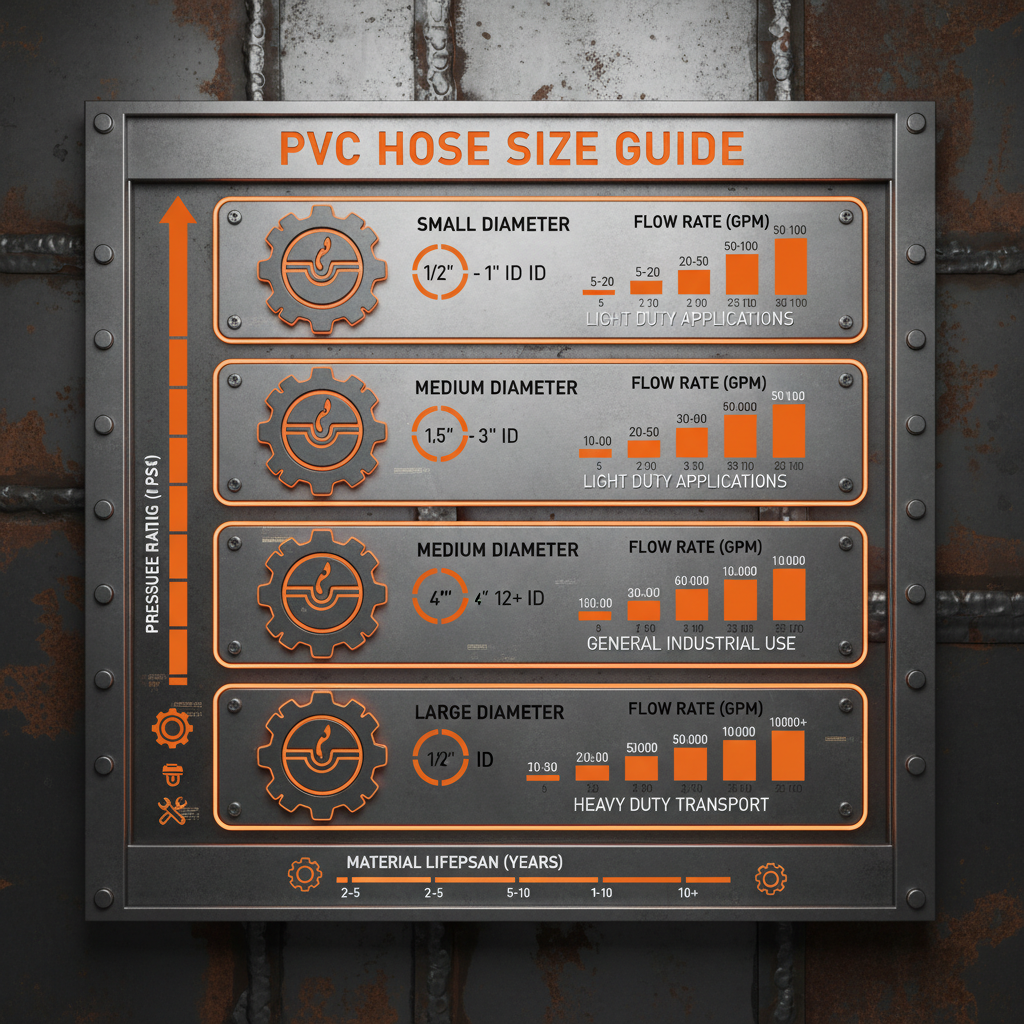
Evaluating the performance of a PVC steel wire hose requires a look at several key parameters: the Internal Diameter (ID), Working Pressure, and Bursting Pressure. The working pressure is the maximum pressure the hose can safely handle continuously, while the bursting pressure is the point of structural failure, usually 3 to 4 times the working pressure.
For example, a hose with a 25mm ID may have a working pressure range of 20-80 Bar depending on the wire density and wall thickness. As the diameter increases, the wall thickness must also increase to maintain the same pressure rating, which subsequently affects the weight per meter and the overall flexibility of the conduit.
pvc steel wire hose supplier Performance Metrics
The relationship between pressure and diameter is non-linear. Larger hoses require more robust steel reinforcement to prevent ovalization under pressure. When selecting a hose, it is imperative to match the bursting pressure to the system's peak surge potential to avoid catastrophic failure.
5Procurement Guide: Selection Criteria
When engaging with a pvc steel wire hose supplier, procurement teams should prioritize material certification and tolerance levels. It is essential to verify that the PVC is free from phthalates if used in sensitive environments and that the steel wire is properly galvanized or coated to prevent internal corrosion from moisture.
Consider the fluid's chemistry. While PVC is excellent for water and many mild chemicals, it may degrade when exposed to strong solvents or hydrocarbons. In such cases, specialized polymer blends or alternative reinforcement materials may be required to prevent the hose from softening or cracking.
Lastly, evaluate the connector compatibility. Since steel wire hoses have a thicker wall than standard tubing, specific heavy-duty clamps or crimped fittings are necessary to ensure a leak-proof seal under high-pressure conditions, preventing hazardous leaks at the connection points.
6Maintenance and Operational Constraints
To maximize the lifespan of a PVC steel wire hose, it is crucial to avoid extreme bending. Exceeding the minimum bend radius puts excessive stress on the steel helix and the PVC bond, which can lead to "delamination" where the wire separates from the plastic, causing a localized weak point.
Thermal constraints are also a significant factor. PVC has a specific operating temperature range; exposure to extreme heat can cause the material to soften, reducing its pressure rating, while extreme cold can make the PVC brittle and prone to cracking under mechanical stress.
Regular inspection for "bubbles" or deformations in the hose wall is recommended. Any visible protrusion of the steel wire or significant discoloration of the PVC suggests material fatigue and indicates that the hose should be replaced before a burst occurs.
7Comparative Analysis of Reinforcement Types
Choosing between different types of reinforced hoses depends on the specific requirements of the application. While steel wire provides the best vacuum resistance, textile reinforcement (braiding) is often lighter and more flexible, though it cannot support suction tasks without collapsing.
When compared to rubber reinforced hoses, PVC steel wire hoses typically offer better transparency and a smoother internal bore, which reduces friction loss and makes cleaning easier. However, rubber may be preferred for extremely high-temperature oil applications where PVC would fail.
| Reinforcement Type | Vacuum Resistance | Flexibility | Primary Use Case |
|---|---|---|---|
| Steel Wire Helix | Excellent | Moderate | Industrial Suction |
| Textile Braid | Poor | High | Low-Pressure Discharge |
| Spiral PVC | Good | Moderate | Water Drainage |
| Rubber Composite | Moderate | High | Oil/Fuel Transfer |
| Double Braid | Poor | Very High | Garden/Light Duty |
| Multi-layer Steel | Superior | Low | High-Pressure Hydraulic |
Ultimately, the decision should be based on the "worst-case" operational scenario. If the system will ever experience negative pressure, a steel wire reinforced hose from a reputable pvc steel wire hose supplier is the only safe and viable choice.
Frequently Asked Questions
Conclusion
Selecting a high-quality pvc steel wire hose is a critical decision for ensuring the safety and efficiency of industrial fluid transport. By balancing the needs for vacuum resistance, pressure capacity, and chemical compatibility, operators can significantly reduce the risk of system failure and operational downtime. The integration of a steel helix provides the structural necessity for suction tasks that standard plastics simply cannot handle.
For procurement teams and engineers seeking reliable, high-performance reinforced hosing solutions, reviewing detailed technical specifications and material grades is essential. To explore a wide range of industrial hose options and find the exact fit for your operational requirements, you can review the available product information at www.ktnewmaterial.com.



 English
 Afrikaans
 Albanian
 Arabic
 Azerbaijani
 Belarusian
 Bengali
 Bulgarian
 Czech
 Danish
 Dutch
 Finnish
 French
 German
 Greek
 Hebrew
 Hindi
 Hungarian
 Indonesian
 Irish
 Italian
 Japanese
 Kazakh
 Korean
 Kyrgyz
 Lao
 Latin
 Lithuanian
 Luxembourgish
 Malay
 Mongolian
 Myanmar
 Nepali
 Norwegian
 Persian
 Polish
 Portuguese
 Russian
 Serbian
 Slovak
 Spanish
 Swedish
 Tagalog
 Thai
 Turkish
 Ukrainian
 Uighur
 Uzbek
 Vietnamese
 Welsh